
What Makes the Great Migration Safari a Once-in-a-Lifetime Experience?
Understanding the Great Migration River Crossing: A Tanzanian Safari Spectacle.
The Great Migration in Tanzania’s Serengeti is one of the world’s most breathtaking natural events, with its dramatic river crossings captivating safari-goers globally. These moments of survival define the migration’s intensity and draw travelers to witness nature at its rawest. This blog post explores the Great Migration’s essence, focusing on the river crossings, migration route, key rivers, timing, animal behavior, best viewing spots, and planning tips, optimized for searches like “Great Migration river crossing Tanzania” and “Serengeti migration safari.” For an expertly crafted experience, Keystone Tours & Safaris offers tailored itineraries that ensure ethical, unforgettable encounters with this phenomenon.
The Meaning of the Great Migration
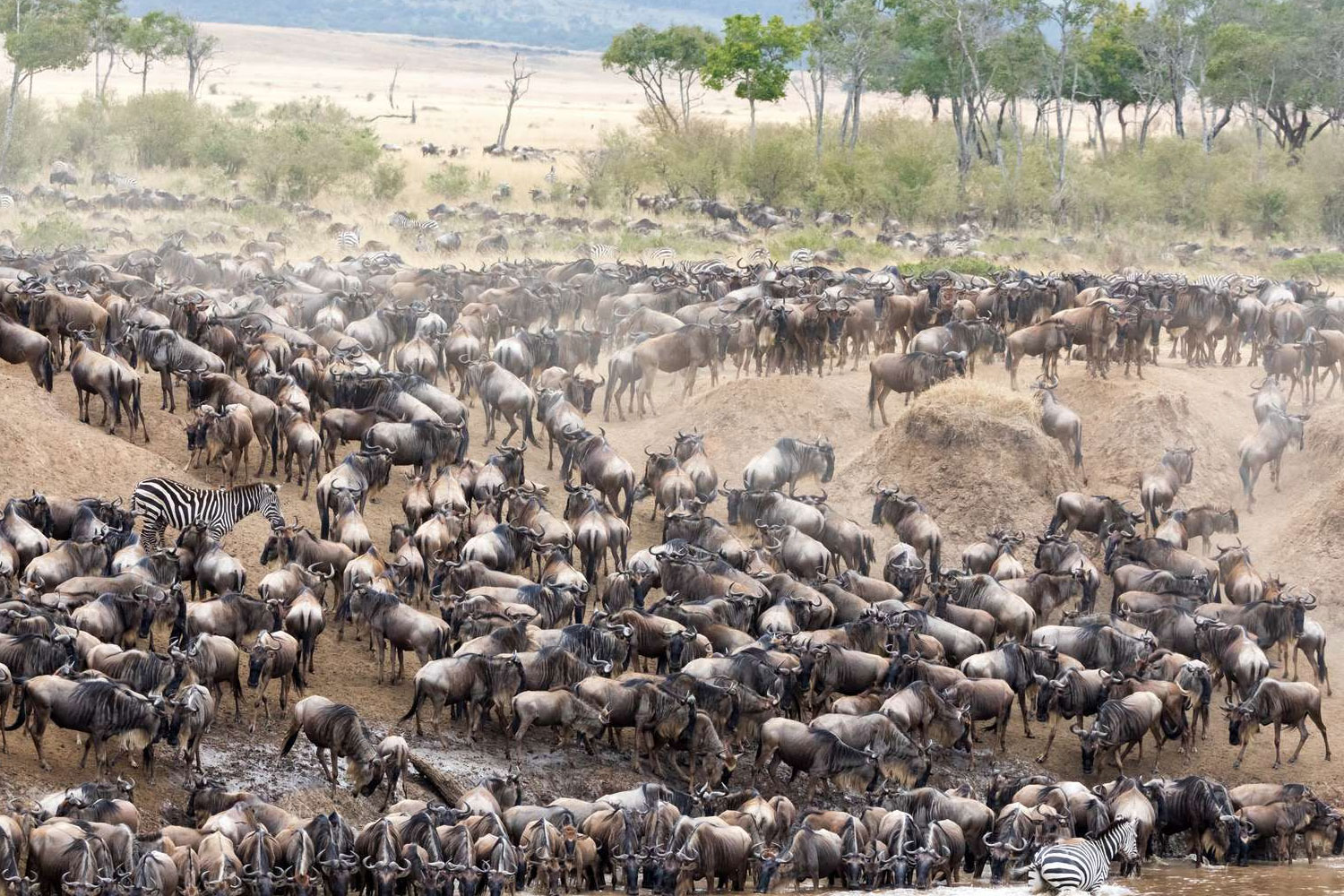
The Great Migration is the annual, cyclical journey of over 1.5 million wildebeest, alongside hundreds of thousands of zebras, gazelles, and other herbivores, across Tanzania’s Serengeti ecosystem. Driven by the search for fresh grazing lands and water, this movement follows seasonal rainfall patterns. It’s the largest terrestrial mammal migration on Earth, a testament to instinct and survival, with herds covering vast distances in a continuous loop through Tanzania’s plains and beyond.
The Significance of the River Crossing
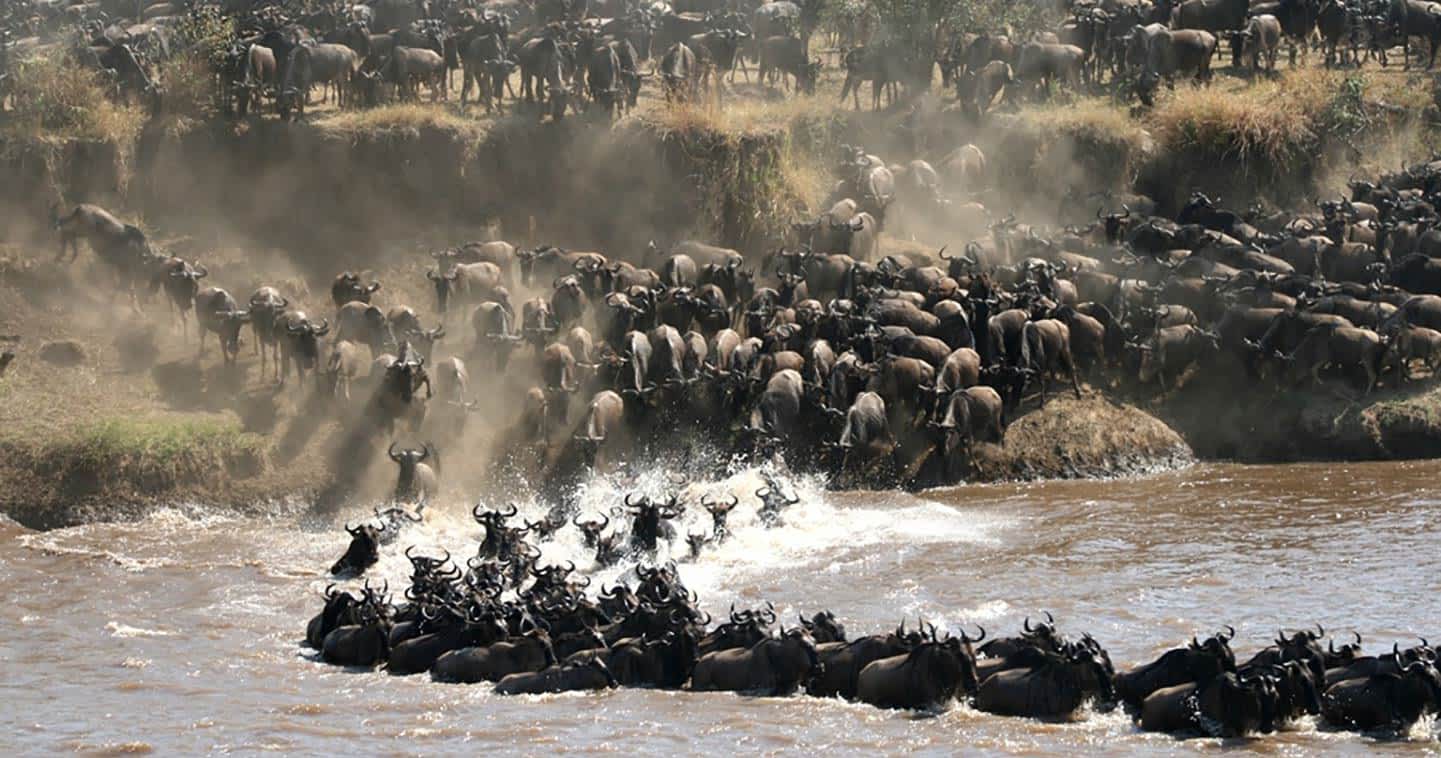
River crossings are the migration’s most dramatic moments, embodying the struggle for survival. As herds encounter major rivers, they face treacherous currents, steep banks, and predators like crocodiles and lions. Thousands may perish in these high-stakes events, which are critical to the ecosystem, providing food for predators and scavengers while enriching the soil with nutrients. For visitors, witnessing a crossing is a profound experience, showcasing nature’s raw beauty and the delicate balance of life and death.

The Migration Route
The Great Migration follows a roughly 1,800-mile clockwise loop through Tanzania’s Serengeti National Park. From January to March, herds gather in the southern Serengeti’s Ndutu Plains for calving season, where nutrient-rich grasses support newborns. In April-May, they move west toward the Grumeti region, then north in June-July to the northern Serengeti, before returning south in November-December as rains replenish southern pastures. Rainfall influences the route, making it somewhat unpredictable but generally consistent.

Key Rivers in the Migration
Two rivers in Tanzania pose the greatest challenges: the Grumeti River in the western Serengeti and the Mara River in the northern Serengeti. The Grumeti, swollen during the rainy season, sees early crossings with crocodile ambushes. The Mara River, deeper and more perilous, hosts the migration’s most iconic crossings, with large crocodile populations and swift currents testing the herds’ resolve. These rivers force herds to congregate, creating intense, chaotic spectacles.

Time and Season of River Crossing
River crossings typically occur from June to October during the dry season, when water scarcity drives herds north. Grumeti River crossings peak in June-July, while Mara River crossings intensify from July to September, with some extending into October. Timing depends on rainfall, with wetter years potentially delaying crossings. For 2025, expect similar patterns, but monitor real-time updates as weather can shift schedules.

Behavioral Patterns During River Crossing
During crossings, wildebeest display a mix of caution and frenzy. Herds amass at riverbanks, hesitating as individuals test the waters, often retreating in fear. Once a few plunge in, a stampede follows, with animals leaping from banks, swimming frantically, and vocalizing in distress. Predators capitalize on the chaos-crocodiles target submerged animals, while lions and hyenas ambush stragglers. Zebras, stronger swimmers, often lead, with wildebeest following in a herd-driven surge, showcasing their instinctual need to move together despite danger.

Features of the Great Migration
The Great Migration is remarkable for its scale and impact. It’s the world’s largest overland migration, with up to 500,000 wildebeest calves born in February, fueling a predator boom. The migration sustains a complex food web, fertilizing plains and supporting predators like lions, hyenas, and cheetahs. Spanning 30,000 square kilometers, it showcases biodiversity, with river crossings as the ultimate display of survival, earning the migration global recognition as a natural wonder.

Best Locations for Viewing
The northern Serengeti, particularly the Kogatende area and Lamai Wedge along the Mara River, offers prime viewing for dramatic crossings. These spots are accessible and frequently see large herd movements. The western Serengeti near the Grumeti River provides quieter, less crowded viewing opportunities. Mobile camps or lodges with river views are ideal, though crossings are unpredictable, requiring patience. Guided game drives from Arusha enhance spotting chances while ensuring safety.

Planning Your Migration Safari
To witness river crossings, plan your safari for July to September, when Mara River action peaks. Book with ethical operators like Keystone Tours & Safaris, who offer mobile tented camps in the northern Serengeti for optimal flexibility. Fly into Arusha or Kilimanjaro Airport, then transfer to Serengeti airstrips. Pack binoculars, neutral-colored clothing, and insect repellent. Choose operators prioritizing low-impact viewing to avoid disturbing wildlife, and check migration trackers for real-time herd locations.
Conclusion
The Great Migration’s river crossings are a testament to nature’s raw power, where thundering herds face life-or-death challenges in Tanzania’s Serengeti. From the Mara River’s chaos to the Grumeti’s quieter dramas, these moments captivate and inspire. For an ethical, immersive safari, trust Keystone Tours & Safaris to deliver a tailored adventure with expert guides and sustainable practices. Contact us today to plan your journey and witness the migration’s epic spectacle firsthand!





https://shorturl.fm/BK1Pr